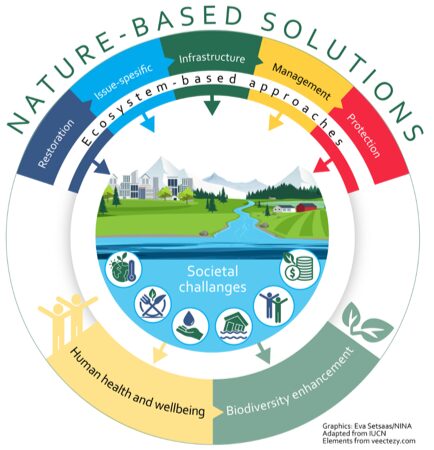
Nature-Based Solutions (NbS) give companies a multitude of benefits, simultaneously addressing climate hazards and enhancing assets, such as improving water quality while reducing flood risk. NbS projects are designed and built to restore local ecosystems to original function, bringing back their highly valuable “ecosystem services.” And they come with a proven track-record, according to peer review research funded by Lloyd’s financial institution. Public agencies have also recognize the value of wetlands to protect investments from climate-change worsening flooding. Working in alignment with nature makes for excellent return on investment.
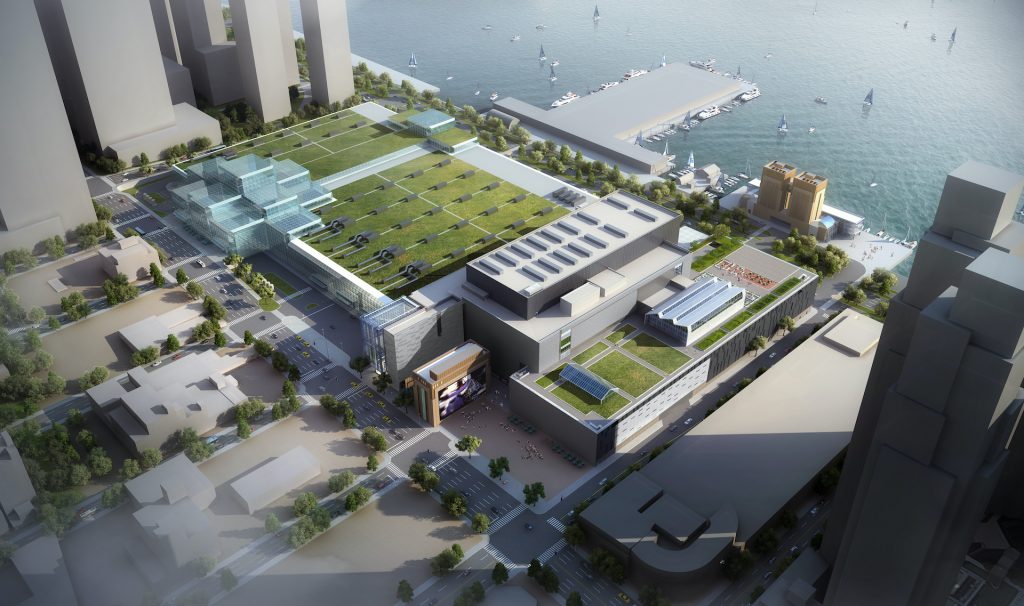
Private companies are now harnessing the power of NbS to address emissions and climate risks due to their cost-effectiveness. To address the risk of property damage from flooding threatened by climate change, Dow Chemical, a legacy manufacturer located on the Mississippi River, has undertaken restoring seasonal wetlands to protect its buildings. In another NbS, Javits Center, an enormous New York City auditorium, replaced its aging and leaking traditional roof with a high-performance living green roof to lower energy demand while maintaining thermal comfort, and the roof now also provides a beautiful park/garden as an additional rentable venue space.
Nature-based solutions often deliver lush ecosystems in place of acres of asphalt, providing climate risk resilience via cost-effective plant biomass that concurrently boosts land values, water quality, water recharge, and carbon sequestration. If a company owns its facilities and surrounding land, and has the budget and bandwidth to execute a construction project (restoring a landscape or retrofitting the built environment), then an NbS can deliver an eye-catching, highly sustainable project. They may also gain significant positive media coverage, boost employee morale, and improve stakeholder relations. In light of the creation of the TDNF (Taskforce on Nature-related Financial Disclosures), taking an NbS approach also displays foresight on where international regulations and guidance is headed.
To illustrate how Climate Positive can guide your company in integrating an NbS to a carbon mitigation project, if a company is aiming to achieve net zero, they may be considering direct air capture technology to cut the last 10 percent of their emissions. However direct air capture is energy-intensive and not yet deployable at scale. The permanence of removals is also important. While “gray” or traditional engineering can deliver scale and permanence, it does not bring the other benefits of a NbS reforestation project scoped with guidance from Climate Positive, such as biodiversity, erosion control, and cost-effectiveness, and so much more.