
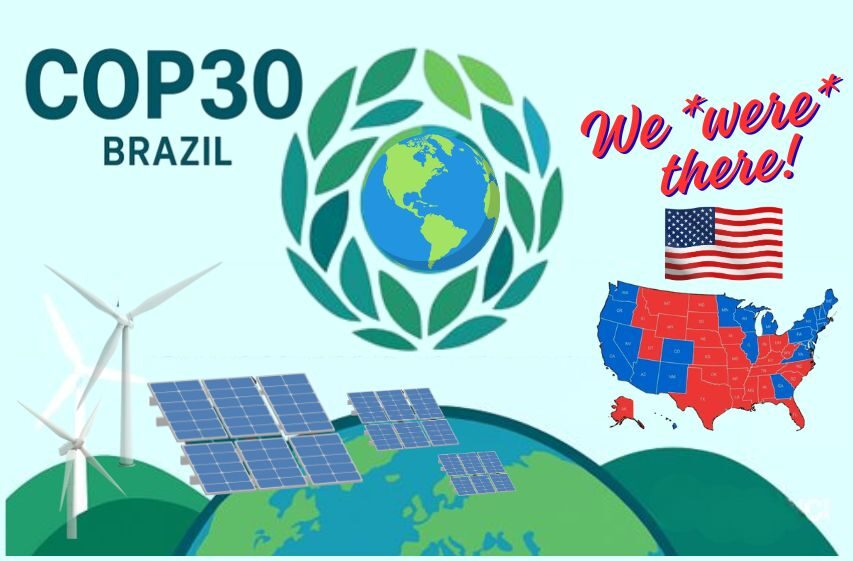
What’s the business angle on #COP30, an international climate change summit of the United Nations where governments negotiate agreements on how to tackle emissions? And what was the USA’s involvement in COP30?
First, fossil fuel energy companies make it a point to participate in the COP meetings, and this year’s Brazil summit had strong industry attendance. Second, fossil fuels are not the sole business interests participating! 180 US companies and trade groups up and down the energy supply chain (including large companies like Siemens, Trane, and Honeywell) submitted a letter of commitment to the COP President under the banner of BSCE (Business Council for Sustainable Energy), affirming their goal to double the rate of energy efficiency improvements by 2030.
Most importantly, US firms are talking with their money! Since 2015, American companies have increased their annual clean energy procurement amount by 5x, from less than 5 gigawatts to over 25 gigawatts by 2024. Much of the recent demand has been driven by the successful tech companies, citing AI usage increases, and associated new data centers ramping up, while maintaining an eye on their GHG emissions and a pure business desire for reliable energy at a predictable price. The Global Renewables Alliance (GRA), which includes powerhouse Google, also affirmed their commitment to tripling renewable energy capacity by 2030 during COP30.
While news reports stated that the United States was missing in action during COP 30, they omitted key facts. While it is true no Trump delegates took part in #COP30, many wise and committed elected representatives from the United States did in fact prioritize attending the international climate summit in Brazil ending November 21. More than 40 American city mayors, state governors, and agency heads from a diverse set of states attended, including officials from the “red” states like Arkansas, Iowa, Indiana, Missouri, Montana, and Nebraska. Participation from “red” or conservative states (where protection of the environment is typically lax) clearly illustrates that a broad array of Americans recognize that we are all stakeholders with climate change-impacted assets, and the transitioning economy is an opportunity for economic development. Residential and business buildings, human health, food crops, and livestock are among the most prominent assets at risk at risk from increasingly catastrophic weather-related disasters (flood, wind, wildfire flames and smoke, drought, heatwaves, etc.) in both red and blue states.